Moroccan wedding traditions
From the proposal to the henna night and the big day: the stages and vocabulary of a wedding in Morocco.
Updated
In short: a Moroccan wedding unfolds in several stages. It begins with the proposal (khotba), is formalised by a contract drawn up by adouls, continues with the hdiya, the hammam and the henna night, and culminates in the main celebration, where the bride, helped by the negafa, changes outfits several times and makes her entrance on the amariya.
The main stages
The proposal (khotba)
The groom's family visits the bride's family to ask for her hand. The families agree on the main points of the wedding.
The marriage contract
The marriage is drawn up by two adouls, after the file has been lodged with the family section of the court. The signing is often marked by a family gathering.
The hdiya
The groom's family brings its gifts to the bride in procession: milk and dates, sugar, fabrics, jewellery and perfume, on decorated trays.
The hammam
A few days before the celebration, the bride goes to the hammam with the women of her family and her friends, with songs and beauty rituals.
The henna night
The nekacha draws henna on the bride's hands and feet, often while she wears a green outfit, surrounded by the women of the family. Henna is a symbol of happiness.
The big day
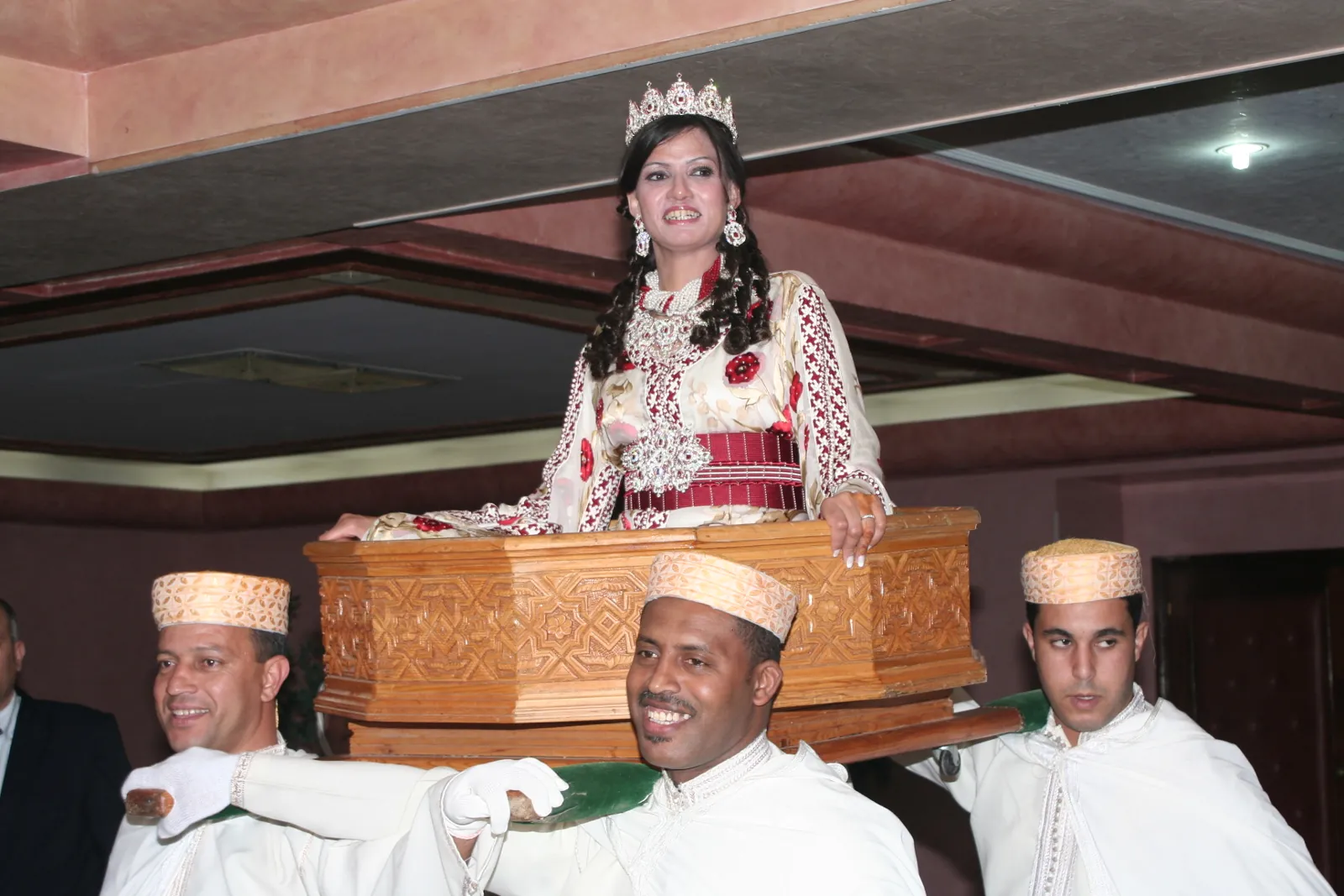
The couple enter carried on the amariya. The negafa manages the bride's outfit changes, to the rhythm of the band, the dinner, tea and pastries.
The lebsa: one outfit per region
During the evening, the bride often wears several outfits honouring the regions of Morocco. The most common:
Fassia
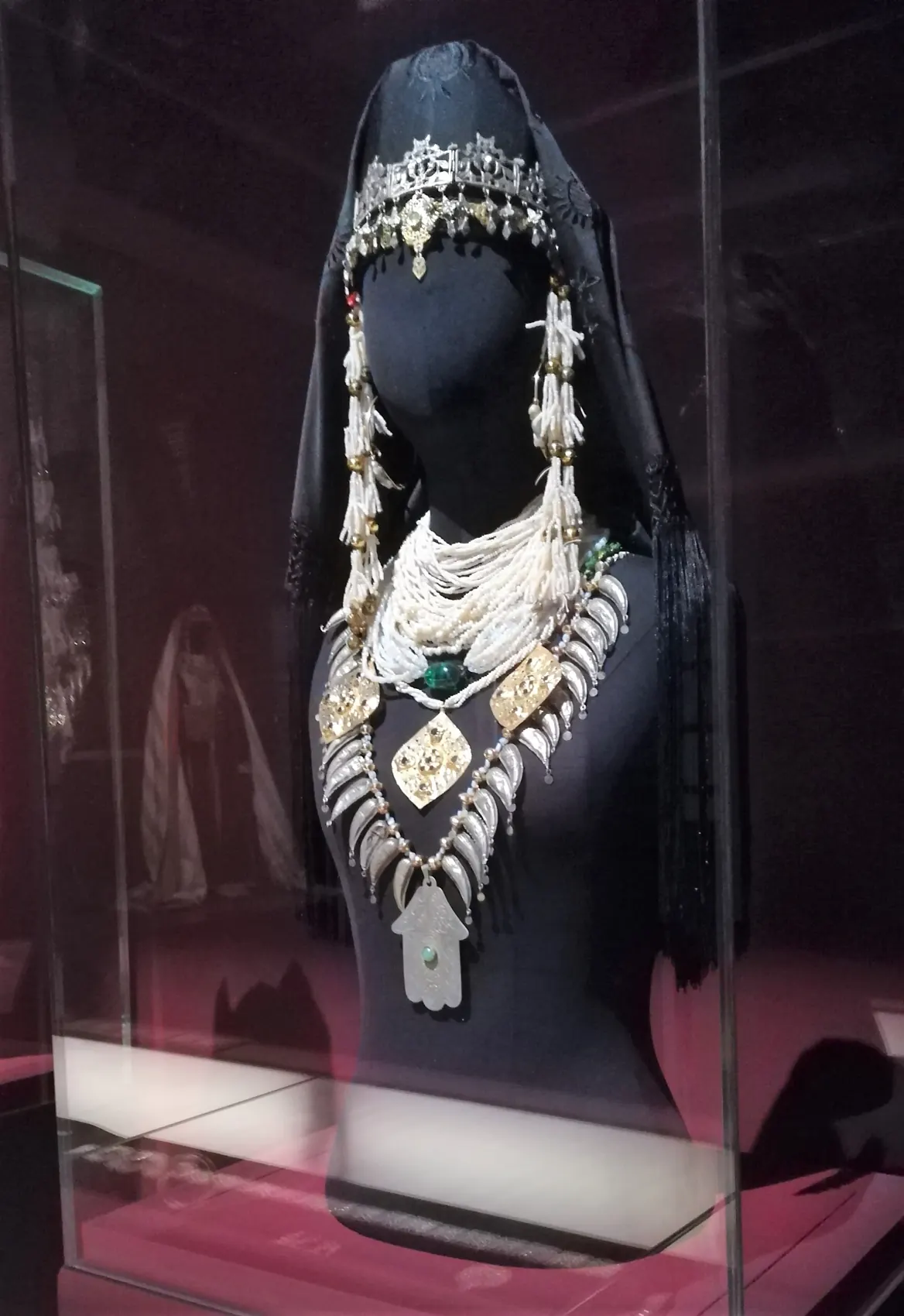
The outfit of Fez: caftan embroidered with gold thread, imposing jewellery and an ornate headdress. Often the most formal outfit of the night.
Rbatia
The outfit of Rabat: richly embroidered velvet caftan with city elegance.
Chamalia
The outfit of the North, from Tetouan to Tangier: embroidery and Andalusian influences.
Soussia
The outfit of the Souss: silver jewellery, fibulae and the bright colours of Amazigh heritage.
Sahraouia
The outfit of the South: draped melhfa, Saharan jewellery and hairstyle.
Moroccan wedding glossary
- Negafaنكافة
- The professional who dresses, adorns and accompanies the bride throughout the celebration. She usually provides the outfits, jewellery and the amariya.
- Amariyaالعمارية
- A decorated palanquin on which the couple are carried into the hall, to ululations and music.
- Takchitaتكشيطة
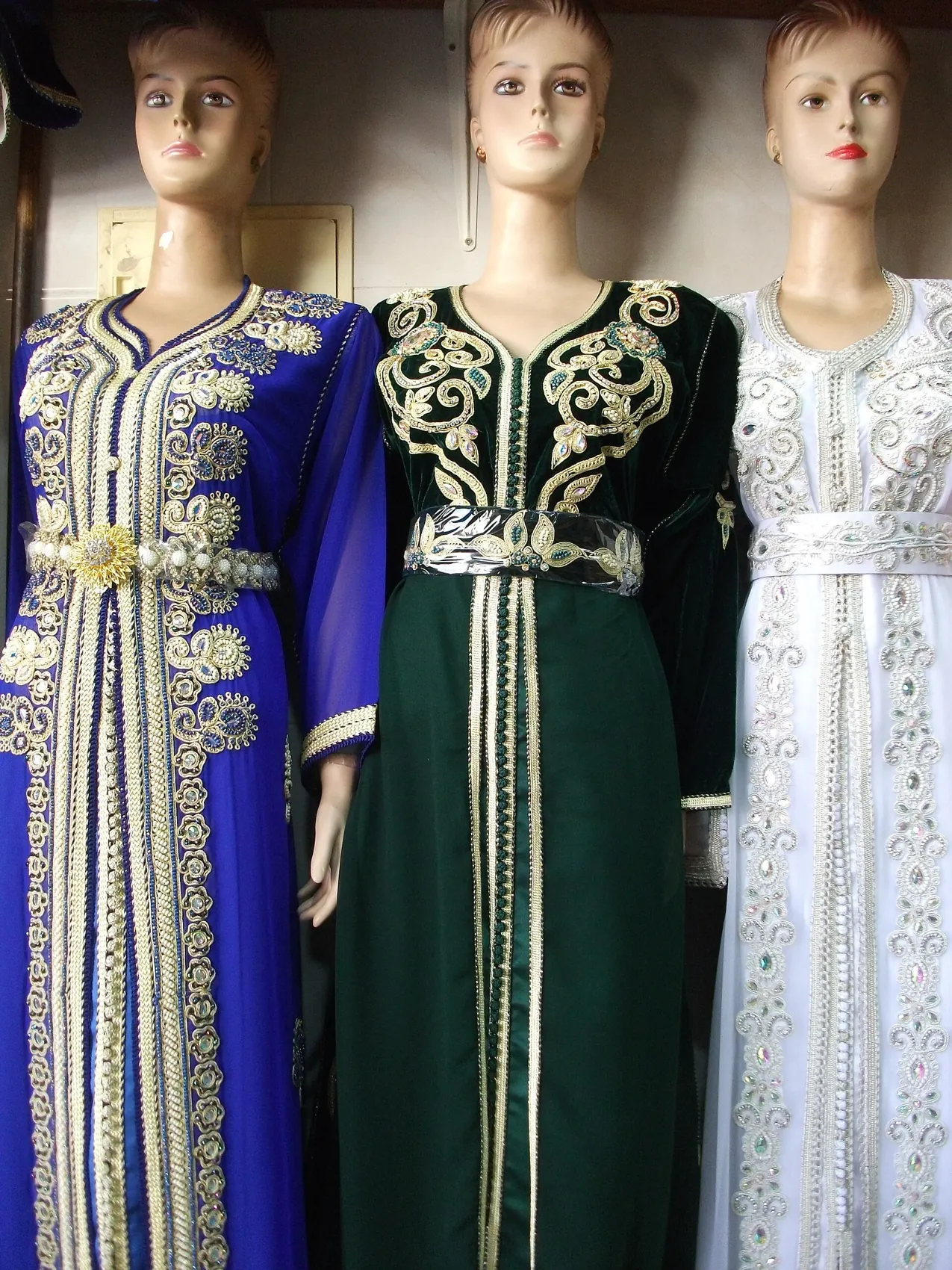
- A two-piece festive outfit: an under-dress and an often embroidered over-dress, cinched at the waist with a belt.
- Caftanقفطان
- A long one-piece traditional robe, embroidered or trimmed with braid, a mainstay of ceremonial dress in Morocco.
- Lebsaلبسة
- The name for each of the bride's outfits during the evening, often inspired by a region: fassia, rbatia, chamalia, soussia, sahraouia.
- Henna and nekachaالحناء والنقاشة
- Henna is applied during a dedicated evening. The nekacha is the artist who draws the patterns on the bride's hands and feet.
- Hdiyaالهدية
- Gifts brought by the groom's family to the bride, presented in procession on decorated trays.
- Adoulعدل
- The officer who draws up the marriage contract. The contract is drawn up by two adouls.
- Dakka marrakchiaالدقة المراكشية
- Percussion and chant music from Marrakech, often played for the couple's entrance and festive moments.
Traditions vary by region and family. This page presents the most widespread customs and does not claim to be exhaustive.
The trades of tradition, together at the show
Negafas, nekachas, tailors, bands: meet them in person in Casablanca.